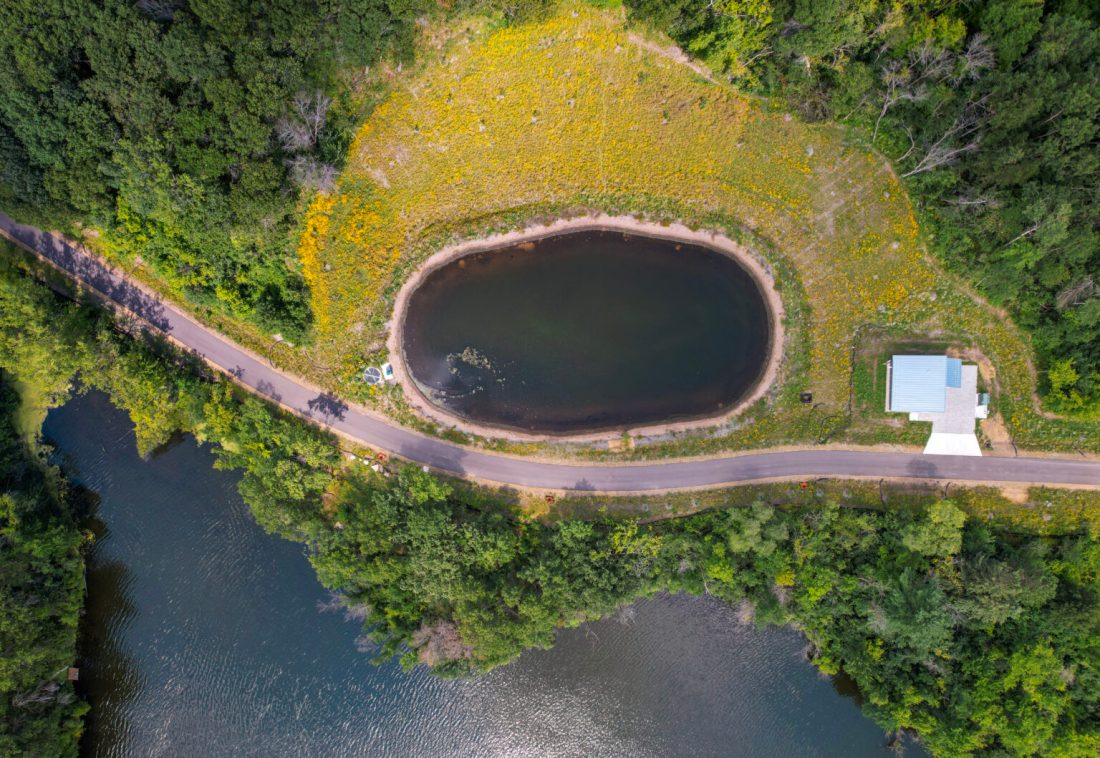
The photo is like an abstract painting you might find on the walls of the Walker Art Center. There is a circle, a line, and waving forms. Solid colors – yellow, green, gray, black. Perhaps it is the third eye, watching over Wilmes Lake, representing intuition, inner wisdom, and perception beyond ordinary sight.
“This project has been really fun,” says Taylor Mills, South Washington Watershed District’s 2025-26 Artist in Residency. “We have four really distinct seasons in Minnesota and that’s been part of the planning. It makes it that much more fun to photograph locations here.”
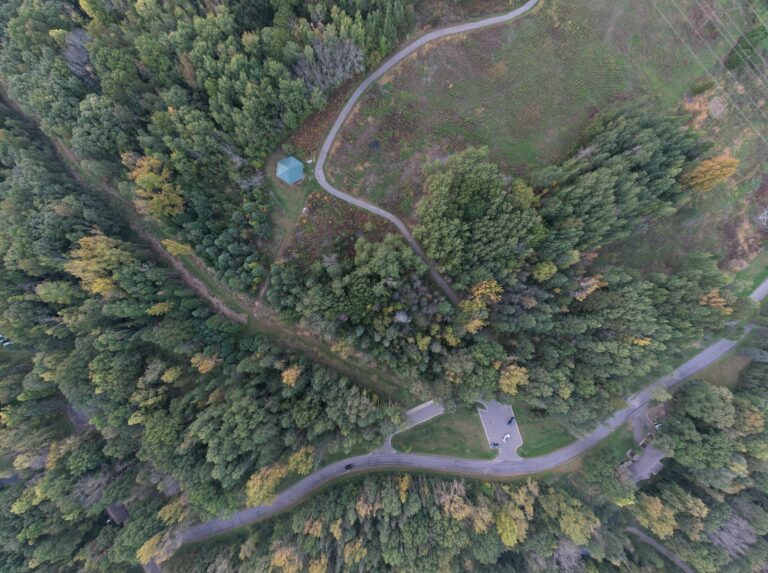
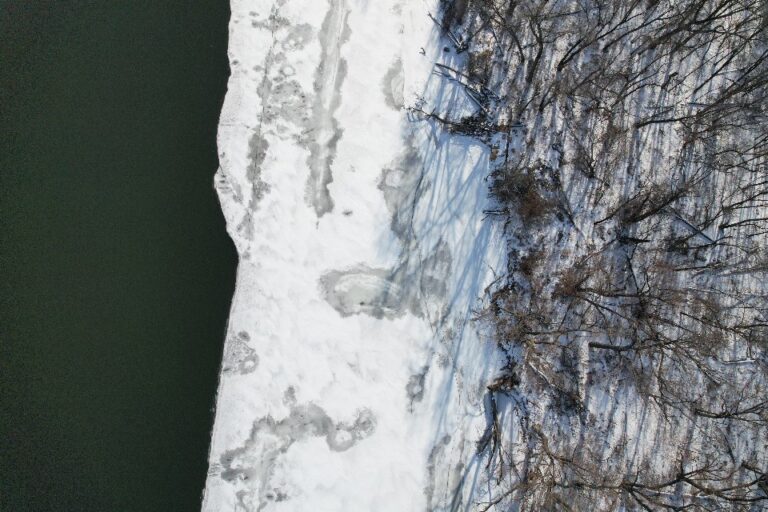
Over the past year, Mills has been working with the SWWD to document water and habitat restoration projects across the watershed, from Woodbury to Grey Cloud Island. She is a Minnesota-born video, photo, and drone professional who specializes in cinematic storytelling that is filmed from above. Images of hers that are currently featured on the watershed district’s website include a lake improvement project on Wilmes Lake in Woodbury, trees and trails at Bailey School Forest in Newport, Hasenbank Stormwater Park in Woodbury, and the Mississippi River in winter.
Mills holds a Bachelor of Arts in Filmmaking from the University of Winnipeg and got her drone pilot’s license in 2020. “As soon as I flew my first drone, I was like, ‘This is it – I’m hooked,’” she enthuses. “As a kid, I always imagined what it would be like to have a birds-eye view.” Currently, she works under her freelance media company, T Mills Films, and serves as a board member for Minnesota Women in Film and TV.
Watershed districts specialize in large-scale projects that help to mitigate flooding and improve water quality in lakes, rivers, and streams. While the projects are hugely impactful, they don’t usually gain recognition from the public and can be hard to showcase with traditional photography. One example is an alum treatment facility in Kargel Park in Woodbury, which was constructed in 2024 to help improve water quality in Wilmes Lake.
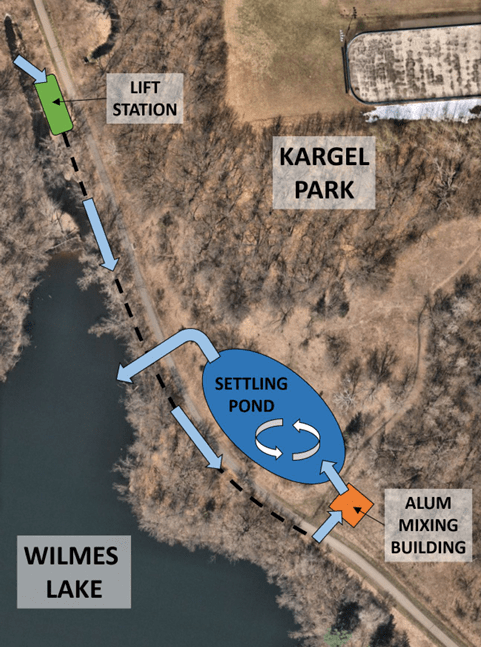
The system pumps stormwater runoff from the surrounding neighborhood into a small building where aluminum sulfate (alum) is added to the stormwater before it is sent out into a settling pond. The alum reacts with phosphorus in the water, forming a solid material called “flocculent” that separates from the water and sinks. The end result is cleaner and clearer water flowing out of the pond into Wilmes Lake, and a reduction in phosphorus of 95 to 283 pounds per year (the equivalent of up to 141,500 pounds LESS algae growing in the lake).
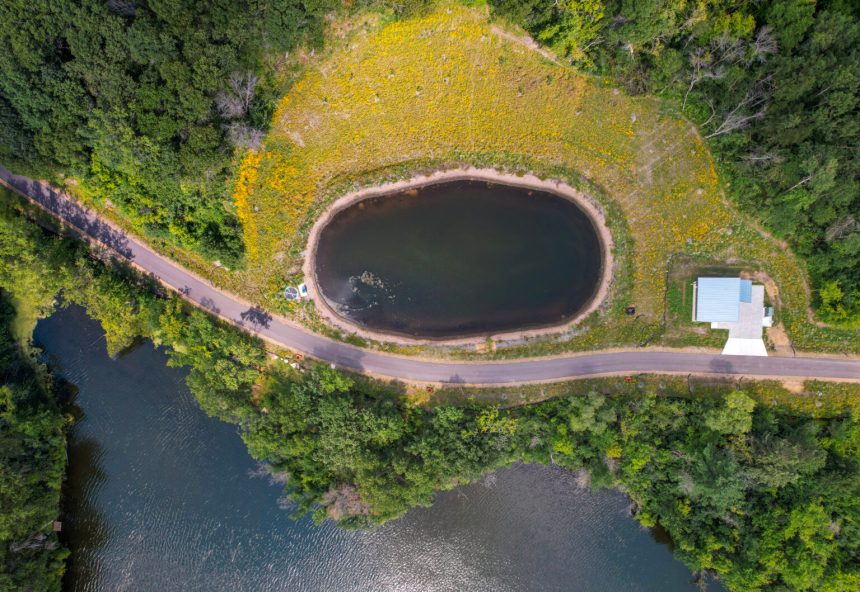
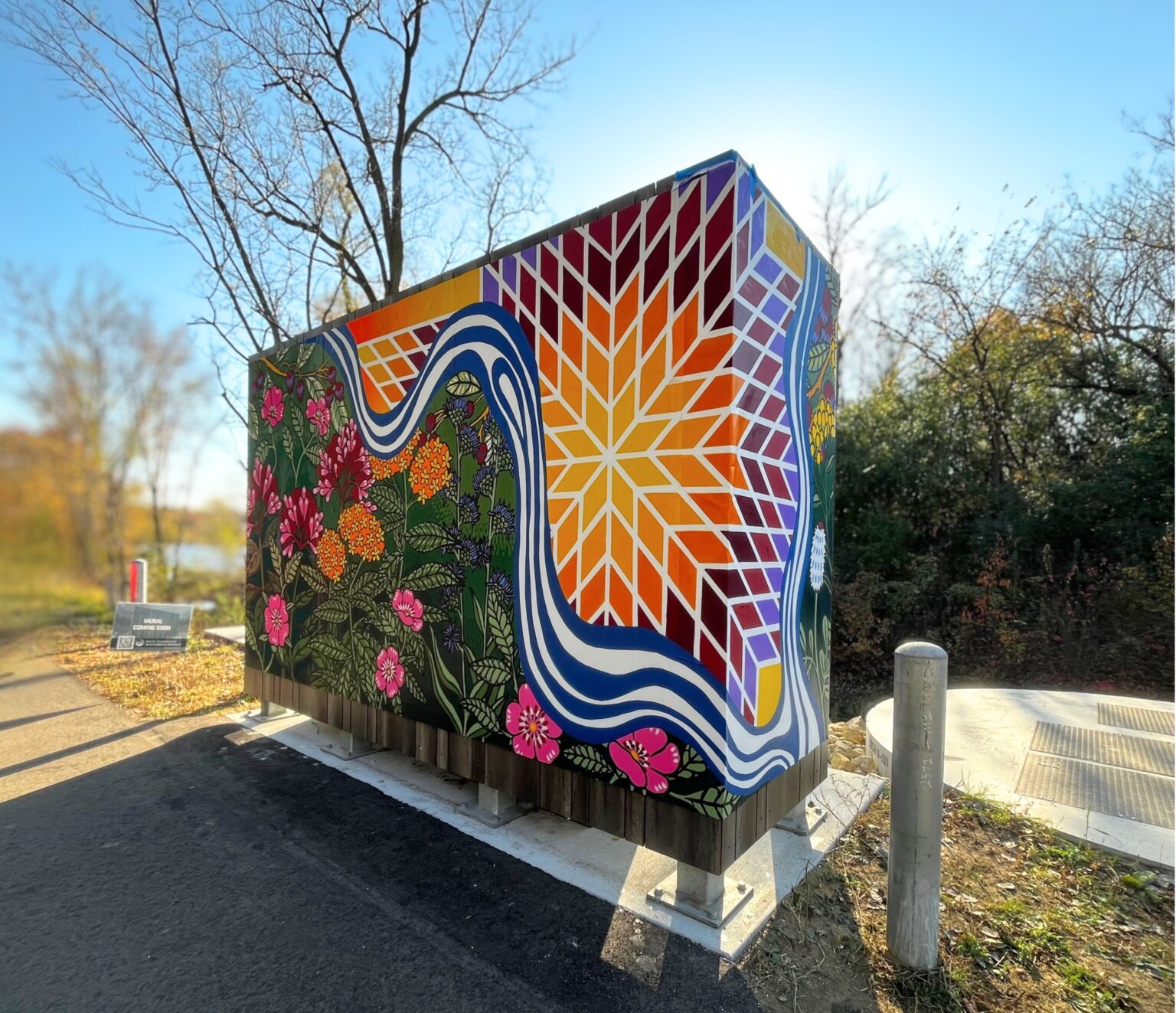
Mills’ aerial photo of Kargel Park helps to show how the lake, pond, and alum treatment facility are connected. She also manages to capture the scene in a way that is both artistic and intriguing. On the ground, SWWD also worked with Native artist Nipinet Landsem to install a colorful mural on a screening wall at the lift station that incorporates the Mississippi and St. Croix Rivers, colorful native plant species, and a star quilt.
“It’s been interesting and inspiring to learn about all of the restoration work the watershed district has been leading,” says Mills. She mentions a prescribed burn at Glacial Valley Park, trees planted at Hasenbank Park, and water levels changing in lakes and rivers throughout the year. “All of these people are working to protect what makes Minnesota so great.”
—
To learn more about the SWWD and see some of Taylor Mills’ photos and videos, visit swwdmn.gov or find the watershed district on Facebook and Instagram.


